We Are Hosts for Memes (Part 2)
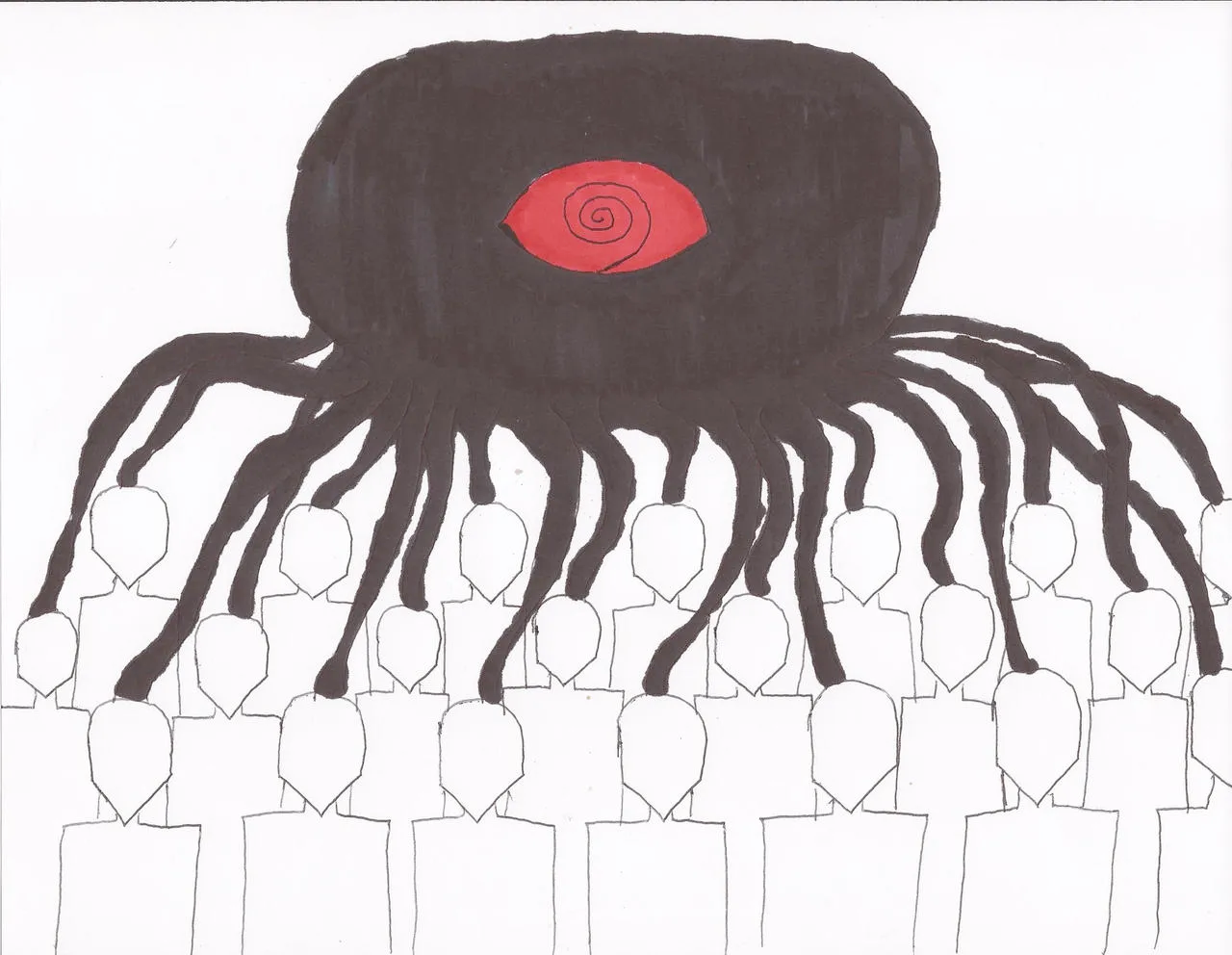
12In this post, I’m going to ask you to consciously try on a new frame. You don’t have to buy the frame I’m proposing; just play along for a bit. After spending a section fully in the frame, we’ll return to a “neutral” frame and evaluate.
In The Selfish Gene, Dawkins presents the gene-centered view of evolution. Typically we think (thought) of evolution and natural selection as working on the species level. Dawkins argues3 that evolution is best thought of as working on the gene level; genes are the unit of selection. Dawkins invites us to shift our frame into the “gene’s eye view”.
From the view of any particular gene, the organism is merely a vehicle for its (the gene’s) reproduction. Organisms are vessels — machines, even — for replicating the genes that they carry. In this frame, organisms don’t use genes; genes use organisms.4
We can also look at things from the meme’s eye view. Look at the world from the perspective of a meme, an idea, an ideology trying to replicate. Minds are vessels for replicating the memes they carry. People don’t have ideas; ideas have people. So, this is the frame I’d like you to get into now. Take the meme’s eye view. Ready?
I’m going to throw a lot at you in the next section. Take your time!
We are hosts for memes
People don’t have ideas. Ideas have people.
A meme is any information that can be copied by others in some way.
Patterns of information that can indirectly influence their surroundings.
This includes any text, thought, habit, action or symbol that can be understood or copied.
Examples of memes: ideas, stories, ideologies, jokes, narratives, brands, identities, habits, practices.
Memes control human behavior by influencing their minds.
Memes exist inside hosts, like you and me.
You and me are hosts, whether you like it or not.
Memes have direct power over hosts, and power over the natural world through us.
The Mind is where these memes reside (in the abstract sense).
The Mind is an emergent effect of neurons firing together.
Just like how a nation or community is an emergent effect of a group of people.
You can view memes like “apps” in the brain’s “software”, if you wish.
(look back at the image at the top)
Memes are like genes.
You can view memes as parasitic, symbiotic or benign, depending on the effect on the hosts.
Similar to genes, memes are also self-replicating patterns of information.
Consider them like “memory genes”, but not made of DNA, just arrangements of neurons.
The same principles of natural selection and evolution applies for memes.
The strong memes survive and replicate, and some memes do so at the expense of their hosts.
Memes use humans to replicate themselves.
Replicators like genes and memes carry information, mutate and spread in the natural world.
The replication is done with the help of the hosts that carry that information.
Your body is one huge advertisement billboard for your genes.
What you do and say is one huge advertisement billboard for your memes.
Memes can also use media to replicate themselves.
Computers can act as hosts too, in the internet age. This one in front of you included.
An advertisement billboard can be a host, too. An internet ad too.
The host doesn’t need to be alive, it just needs to be active in some way in spreading information.
Memes are selfish. They don’t necessarily help us.
Memes are selfish. They can damage the hosts if that means higher chances of replication.
Many memes do not benefit the one that carries them, the host, but someone or something else.
(see smoking, drinking, marketing, social media, politics, religion, terrorism, gambling)
Some memes are useful, most memes are useless, and others are damaging or even self-damaging.
You can refer to a damaging meme as a toxic meme.
Examples of toxic memes: Scientology, Anti-Vax Movement, toxic masculinity, toxic femininity, many political or religious ideologies, marketing campaigns that just focus on profit. Examples are endless.
Memes are spread based on their ability to spread.
Memes are not spread based on their usefulness to us or based on Truth.
They are spread based on their ability to spread.
Memes are like pathogens.
We have been infected by memes, and still are every waking day of our lives.
A brain that is exposed to an idea that successfully gets encoded inside it, has been infected by it.
That brain will end up having a different behavior as a result,
And through the host’s actions, the meme will be spread further.
It’s a constant battle for ideas, and brains are the battlegrounds where these are fought.
Like a computer virus residing inside a laptop inner circuitry.
Once an individual host has been infected, it will end up spreading it to others.
The memes that are currently alive are memes that are selfish and have strong mechanisms to stay alive.
Memes face a struggle for existence.
If they don’t repeat themselves, they die out.
The current memes that are alive are sticky, and they resisted death many times.
Hence, they will likely resist death in the future as well.
Memes evolved to be selfish and self-preserving.
This is the reason why many minds don’t like being exposed to opposite ideas.
It is just an evolved mechanism of the memes themselves.
If they didn’t do that, the memes themselves would’ve died long ago.
As many past memes we held died out.
Only selfish memes (mostly) remained inside us nowadays…
The brain is a battlefield of ideas.
Quoted text is taken from the website wearehostsformemes.com. If you have room for more, I’d recommend checking out the full text on the website.
Phew. Okay, now let’s step out of this frame and consider what’s been said.
Memes as pathogens?
The meme’s eye view lends itself to seeing memes as pathogens. The previous section discussed this, but I’d like spell it out this view in my own voice.
The “memes as pathogens” view
Contagious diseases are caused by germs, pathogens that are invisible to the naked eye like bacteria, viruses, and parasites. Pathogens infect the body and use it for reproduction; they use organisms as hosts. Infected organisms spread pathogens to the those around them. Pathogens often change behavior in a way that makes the infected organism more likely to spread the pathogen: colds make you cough and sneeze, Toxoplasma gondii makes rodents attracted to the smell of cat pee. Pathogens are indifferent to whether they benefit their hosts, and as a result they usually end up harming their hosts.
Memes are like pathogens that infect our minds rather than our bodies. Memes spread from person to person in a manner just like pathogens. Memes that rapidly spread wide are aptly called viral phenomenon. Epidemiological models of contagion spread can be applied to memetic spread; R0 can be applied to memes. Some popular ideas are seriously harmful to our thinking. It’s not crazy to call them mind viruses. Conspiracy theories use and corrupt our faculties of reason for their own purposes; they can be likened to parasites.
We have individual memetic immune systems: when someone says “that sounds like a conspiracy theory” or “that sounds like a cult”, that’s the memetic immune system at play. Entire cultures can develop specific antibodies in reaction to major memetic events. Consider how Western culture reacts to Fascism — that’s the cultural immune system learning from Nazi Germany.
Memes often change behavior in a way that makes the infected mind more likely to spread the meme. Religions tell you raise your children religious; clever X posts get you to retweet; weird short videos make you send them to a friend; outrage about a political topic causes you to bring up the topic in every conversation; catchy songs get you to hum them. Memes are indifferent as to whether they benefit their hosts, and as a result they usually end up harming their hosts.
The problem with “memes as pathogens”
The problem here, and something I think “we are hosts for memes” section underrates, is that memes don’t always harm their hosts. Memes can be negative, neutral, or positive for their host, whereas pathogens, by definition, cause disease and are thus inherently negative. In biology terms, we can talk about guest organisms as being parasitic, commensal, or mutualistic: harmful, neutral, or beneficial with regards to the host. The term that encompasses all types — the general term for “guest organism” — is “symbiont”.6
In the section above I wrote “Memes are indifferent as to whether they benefit their hosts”. This isn’t true. Memes can benefit from benefiting their host. For example, people are more likely to copy the beliefs of attractive people, all else being equal. Thus, a meme that makes its host more attractive (like wear makeup or lift weights) has an advantage in spreading. Also consider that memes can benefit from harming their host. Information that causes fear, anger, or outrage motivates people to share it by virtue of it causing that emotion. As Scott Alexander would say, “it’s bad on purpose to make you click”.
From the We Are Hosts for Memes section:
Memes are not spread based on their usefulness to us or based on Truth.
They are spread based on their ability to spread.
The second line — memes are spread based on their ability to spread — is true. The first line is not exactly right, since usefulness and proximity to Truth are aspects that can and do help memes spread. Historical cultural diffusion shows that useful memes can spread by virtue of being useful. Guns spread because they’re extremely useful weapons, not because of any complicated memetic patterns. (In general, memetic success due to usefulness is often the case with technology.) And over long periods of time, other memes like marriage and hygiene norms can be selected for usefulness via cultural evolution — cultures that get sick less and have more children will out-compete cultures that get sick more and have fewer children.78
The usefulness of “memes as pathogens”
Regardless of whether a meme is parasitic, commensal, or mutualistic, it spreads by being passed on from human to human. This is fundamentally the same as to how contagious pathogens spread. Memes are contagious and spread via contagion, even “good”9 memes. This is very important to understanding how they work.
The idea that memes change their hosts’ behavior, that memes have “symptoms”, is true and important. The idea that memes are constantly battling for attention and mind space, that brains are “battlegrounds”, is true and important. True and important: the idea that “memes face a struggle for existence. If they don’t repeat themselves, they die out. The current memes that are alive are sticky, and they resisted death many times.” True and important: “Memes evolved to be selfish and self-preserving.”
Synthesizing the gene and pathogen view: Memes as symbionts
“Symbiont”, remember, is the general term for guest organism. Now, genes aren’t usually considered organisms, so it would be some kind of linguistic abuse to call them symbionts. What I wish to highlight is that genes, just like pathogens and all symbionts, exist inside a host organism. Indeed, humans as hosts for memes was the frame I asked you to take on in the beginning of this post. I hope that I’ve shown the ways in this framing is true and useful. Actually, at this point it seems misleading to merely call it a framing — isn’t the following just straightforwardly true?
Memes exist inside hosts, like you and me.
You and me are hosts, whether you like it or not.
You can view memes as parasitic, symbiotic or benign, depending on the effect on the hosts.
Similar to genes [and pathogens], memes are also self-replicating patterns of information.
The same principles of natural selection and evolution applies for memes.
What you do and say is one huge advertisement billboard for your memes.

Footnotes
-
Image source: https://www.thepsmiths.com/p/review-demons-by-fyodor-dostoevsky ↩
-
Alternative title for this post: Ideas have you ↩
-
The Gene-centered view of evolution is now consensus. ↩
-
Now, it’s true both that organisms use genes and that genes use organisms. But from the gene’s point of view, the gene is using the organism. Saying “organisms don’t use genes; genes use organisms” is a way to get us into the gene-centered frame. For some people, the “organisms don’t use genes” part is going to cause them to rebel and be counterproductive for entering the frame. If that’s you, you don’t have to say that part; instead just emphasize the “genes use organisms” part. ↩
-
I will be quoting liberally from this website, as it perfectly captures the memes-eye view framing. ↩
-
I found it difficult to find this word — the opposite of “host” is “guest”, but “guest organism” seems to not be a term used outside of contexts that refer to a host? For instance, there’s no Wikipedia page for “host organism”. So, I asked an LLM and got “symbiont”. I don’t love the word, as “symbiont” comes from “symbiosis” which, while it can refer to any relationships often used as a mutalistic living together. Also: I found that not having a concept handle that included both parasitic and beneficial organism was making it hard to think about all this! ↩
-
But again, memes that we might consider “harmful” can also be selected for via cultural evolution, like militarism. ↩
-
Note that I’ve changed to talking about cultural selection here. In general, it’s going to be helpful to distinguish memetic selection within a culture from memetic selection between cultures — intra-cultural memetic dynamics from inter-cultural memetic dynamics. I think of my project with memetics as being more focused on the intra-cultural; much has already been written about inter-cultural dynamics. ↩
-
mutualistic ↩